I'm
going to copy some of my favorite quotes about NDT/Bobath. The quotes
themselves are links that will take you to the reference.
"Bobath therapy is similar or inferior to other rehabilitation approaches (meaningful task-specific training, constraint-induced movement therapy, ARM-basis training, motor relearning program, movement science-based physiotherapy) for treating upper limb motor impairment and disabilities in acute, subacute and chronic stroke patients... At present, there are insufficient arguments for integrating Bobath therapy into stroke rehabilitation with a view to improving UE motor impairments or disabilities."
"The NDT approach was not found effective in the care of stroke patients in the hospital setting. Health care professionals need to reconsider the use of this approach."
"The Bobath concept is not superior to other approaches for regaining mobility, motor control of the lower limb and gait, balance and activities of daily living of patients after stroke."
"Results show no evidence proving the effectiveness of NDT or supporting NDT as the optimal type of treatment..."
"There was no evidence of superiority of Bobath on sensorimotor control of upper and lower limb, dexterity, mobility, activities of daily living, health-related quality of life, and cost-effectiveness."
"There is now a growing body of research and opinion saying Bobath is out of date and obsolete, not least because of emerging data from neurosciences and should be abandoned in favour of an evidence-based approach."
"Families continue to be advised that they should seek Bobath- or NDT-trained therapists and avoid those who are not, which unfairly and, I would contend, unethically discredits those therapists and programs providing evidence-based treatment but are not using NDT."
"Bobath therapy is similar or inferior to other rehabilitation approaches (meaningful task-specific training, constraint-induced movement therapy, ARM-basis training, motor relearning program, movement science-based physiotherapy) for treating upper limb motor impairment and disabilities in acute, subacute and chronic stroke patients... At present, there are insufficient arguments for integrating Bobath therapy into stroke rehabilitation with a view to improving UE motor impairments or disabilities."
"The NDT approach was not found effective in the care of stroke patients in the hospital setting. Health care professionals need to reconsider the use of this approach."
"The Bobath concept is not superior to other approaches for regaining mobility, motor control of the lower limb and gait, balance and activities of daily living of patients after stroke."
"Results show no evidence proving the effectiveness of NDT or supporting NDT as the optimal type of treatment..."
"There was no evidence of superiority of Bobath on sensorimotor control of upper and lower limb, dexterity, mobility, activities of daily living, health-related quality of life, and cost-effectiveness."
"There is now a growing body of research and opinion saying Bobath is out of date and obsolete, not least because of emerging data from neurosciences and should be abandoned in favour of an evidence-based approach."
"Families continue to be advised that they should seek Bobath- or NDT-trained therapists and avoid those who are not, which unfairly and, I would contend, unethically discredits those therapists and programs providing evidence-based treatment but are not using NDT."
"The Bobath concept is now so diverse that it can be difficult to know where it came from and what it is: there are so many derivatives of it that it could be considered a disservice to ... Bobath to continue to practise under the Bobath name."
"It is almost impossible to define what Bobath/NDT is in current times given that the approach has become so diverse, and in all probability, one needs to go back to the original Bobath ideas to understand what it is."
The following quote is from Diane Damiano, M.D., a senior scientist at the NIH. Have a look at it and then I'll post an email I got from her a few years ago where she talks about the crap that rained down on her for writing bad things about NDT.
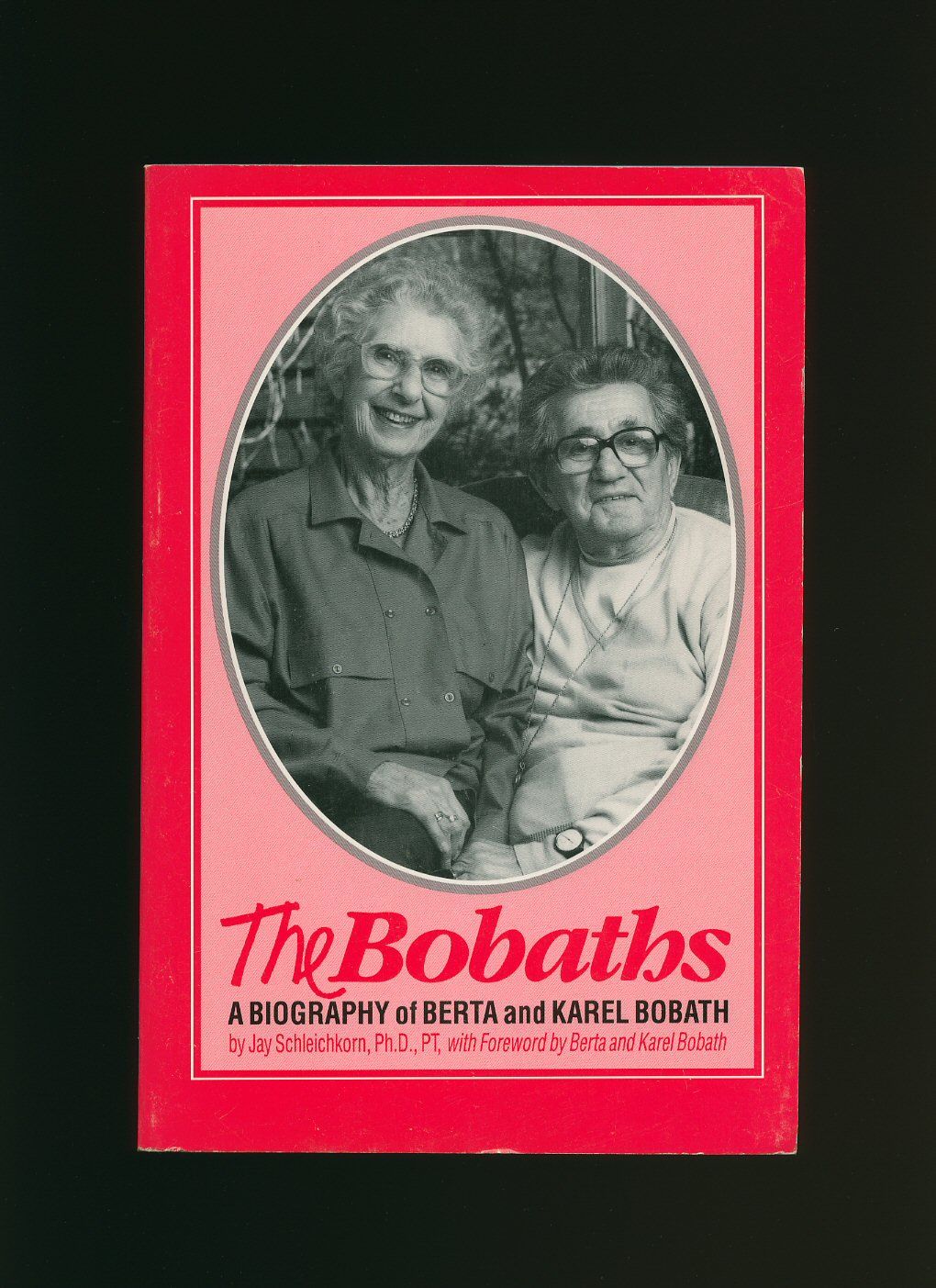
"I refer to (followers of Berta and Karel Bobath) as the ‘torch carriers’, likening them to those who ‘carry a torch’ for someone in a romantic sense, something which is typically not reciprocated or based in present day reality."
We are definitely like-minded but my speaking out about NDT brought out some very ugly emotional responses from around the world…. My new approach is not to speak out against anything, but just to speak more loudly FOR things – like evidence based practice, neuroplasticity, etc.. Science will win this argument, but it is sadly not as fast as we all would like or that patients deserve! Keep up your good work – we are doing similar things here at the NIH in children with CP as you are doing in stroke (using FES and robotic assistance to stimulate more and better movement).
The following quote is my personal favorite. NDT has a long history of taking the hard work of researchers and exclaiming "That's NDT!" They then proceed to screw up a perfectly good treatment option by smearing Bobath/NDT all over it.
Study
systematic review
systematic review
systematic review
a great non-scientific discussion here
NDT/Bobath has been used on stroke survivors for decades and decades. When I was in school professors talked about it as if it was the most awesomest thing that had ever been awesome. It was the pinnacle. But it was complicated. It was so complicated you couldn't even learn it in school. You have to learn it from NDT/Bobath gurus. You could've gone to the Harvard school of physical therapy (if there was one -- which there isn't) and you still couldn't learn NDT/Bobath. Which is a red flag right there. If it works so well it would be required.
Instead, after graduating you have to go and get "certified" by NDT/Bobath gurus. Those gurus would've learned from other gurus, and up the pyramid it goes. NDT/Bobath training is expensive. We're talking about thousands of dollars and weeks of a therapist's life.
What could they possibly be teaching for that amount of time and money?
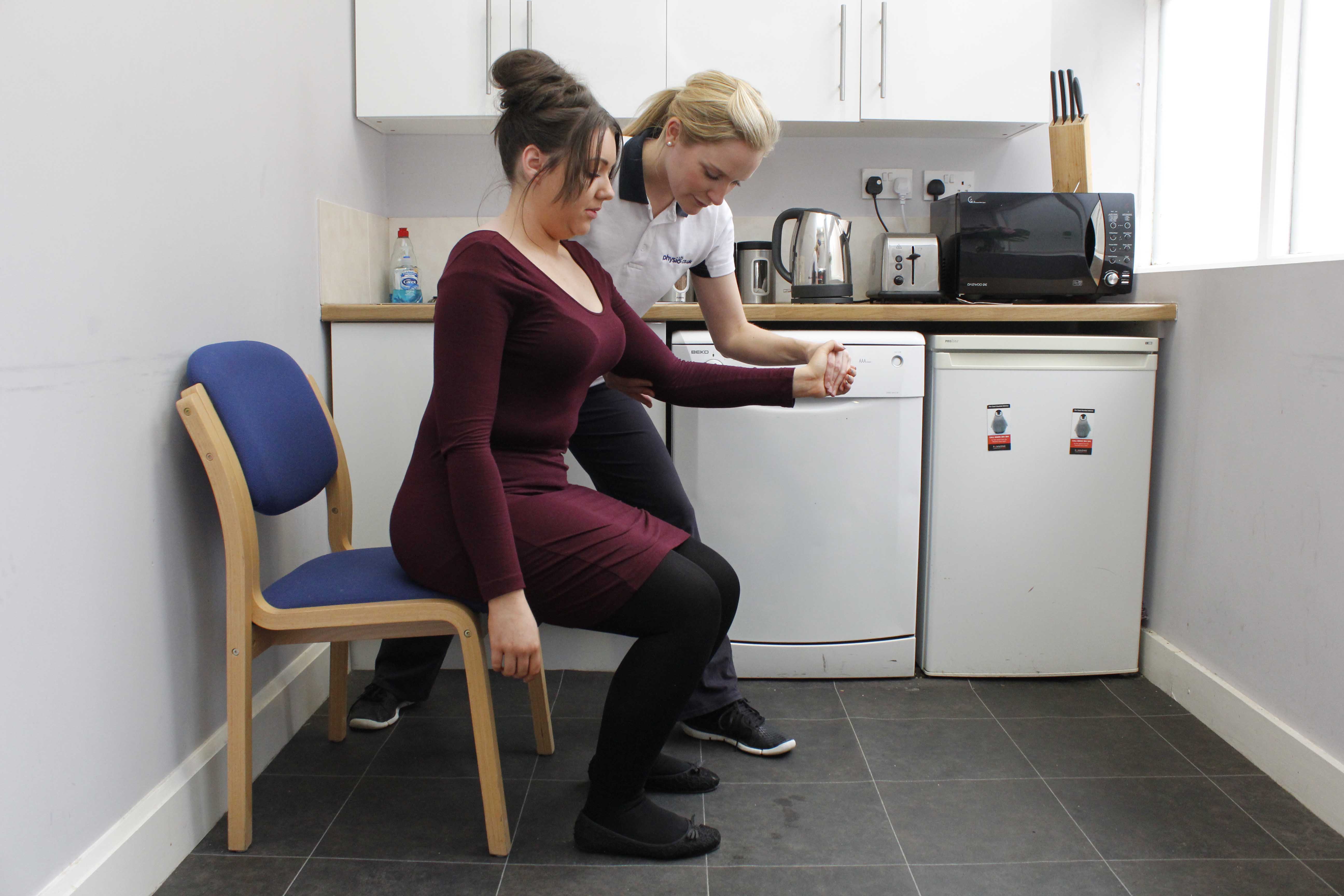
NDT/Bobath uses "patient handling" where if you touch the patient in a particular way the patient would get better. Which makes no sense. If you could touch somebody and make them better that would be really nice. Touching is great. "Hands-on" is the way many rehab clinicians describe themselves. But does this hands-on treatment work for stroke? Is NDT/Bobath effective?
No and not really.
And how do I know this? Systematic reviews. Systematic reviews can be used to figure out if anything is effective for anything -- at least in medicine. If you want to be sure that something is effective you turn to systematic reviews. It's basically a study of all the qualified studies of whatever the subject is. This study of studies either says the thing works, the thing doesn't work, or they don't know yet.
NDT/Bobath always does poorly in systematic reviews. And that should be the end of it, right? It doesn't work. Goodbye. But not so fast. I've been doing talks for years to therapists. I've heard every justification for continuing NDT/Bobath.
Here are some arguments made by NDT/Bobath therapists:
1. "There's research that says it works, and research that says it doesn't work. Its 'he said she said.' I choose to believe the research that says it works."
There are individual studies that say that NDT/Bobath works. Individual studies prove little. The real question is, what do all the studies say? Large groups of studies, from researchers around the world, can be looked at and analyzed en masse. These "studies of studies" are called meta- analyses and systematic reviews. For NDT/Bobath there are quite a few; links below. They all come to the same conclusion: NDT is not particularly effective.
2. "NDT incorporates all the latest research into NDT. Therefore NDT is research-based."
I call this the "Horshella."
Person 1: "I love horseradish."
Person 2: "Well I love Nutella!"
Person 1: "Oh, horseradish tastes great with Nutella."
Maybe. But we should probably test it before we market "Horshella". Smearing NDT/Bobath all over well run clinical trials does not make NDT/Bobath research-based. In fact, it destroys the original research by adding a debilitating confounding variable. Adding NDT/Bobath to a well researched intervention may make that intervention better, worse, or not affect it at all. But the original research was never done with NDT/Bobath, so we'll never know. Stealing other people's research and glomming it does not make your intervention research-based. All you've done is hijacked well run clinical trials, and in the process made everyone look bad.
3. "I don't need research to tell me something works. I've seen it work."
The world is flat. And I can prove it. Look out the window. See? I know global warming is not happening. When I got out of the shower this morning I was freezing! The sun revolves around the earth. Every day the sun comes up over there and goes down over there, so its revolving around us.
"I've seen it work" speaks to clinical observation, a very important part of being a good clinician. But what if we were talking about cancer? If the oncologist said "I've have this treatment that I've seen work," your question might be, "What does the research say works?" Clinical practice without research is bad for cancer patients and stroke survivors. Clinicians are not blinded, they don't gather and analyze data, they don't have a control group, there is no elimination of confounds and on and on. Simply: Clinical observation won't tell you if A works better than B.
4. "Research doesn't know what works so I can use anything I want."
Here is the American Heart Association Scientific Statement on the Rehabilitation Care of the Stroke Patient. It mentions constraint induced therapy, electrical stimulation, robotics, etc. It not only doesn't recommend NDT, it doesn't mention NDT.
5. "What do I use for very low level survivors? They can't move and/or can't follow directions. So, I move them. At least I'm doing something."
Nothing else stops the plague so we're sticking with leeches. (The difference is that leeches may actually do harm. NDT does not do harm except in the sense that it leeches (!) $$ that could be better spent elsewhere.)
Remember: There are only two kinds of true paralysis after stroke: Spastic and flaccid. Most survivors can move. Many, however are told not to move on their own because its bad movement, and will cause more bad movement. And who suggested bad movement will cause more bad movement (which is not true)? Bobath! Bobath called the movement after stroke "pathological" and insisted it be suppressed. To quote Bobath's book, Adult Hemiplegia: The aim of treatment should be to inhibit the patient's abnormal patterns of movement because we cannot superimpose normal on abnormal movements. Let's say that a therapist was able to do this during treatment. Does the survivor not move the rest of the time for fear of abnormal movement?
Later... The movements the patient performs with or without the therapist help should not be done with undue effort.