Showing posts sorted by relevance for query NDT. Sort by date Show all posts

Saturday, January 5, 2013

Neuro-Developmental Treatment: meh.

I'm going to copy some of my favorite quotes about NDT/Bobath. The quotes themselves are links that will take you to the reference.

"Bobath therapy is similar or inferior to other rehabilitation approaches (meaningful task-specific training, constraint-induced movement therapy, ARM-basis training, motor relearning program, movement science-based physiotherapy) for treating upper limb motor impairment and disabilities in acute, subacute and chronic stroke patients... At present, there are insufficient arguments for integrating Bobath therapy into stroke rehabilitation with a view to improving UE motor impairments or disabilities."

"The NDT approach was not found effective in the care of stroke patients in the hospital setting. Health care professionals need to reconsider the use of this approach."

"The Bobath concept is not superior to other approaches for regaining mobility, motor control of the lower limb and gait, balance and activities of daily living of patients after stroke."

"Results show no evidence proving the effectiveness of NDT or supporting NDT as the optimal type of treatment..."

"There was no evidence of superiority of Bobath on sensorimotor control of upper and lower limb, dexterity, mobility, activities of daily living, health-related quality of life, and cost-effectiveness."

"There is now a growing body of research and opinion saying Bobath is out of date and obsolete, not least because of emerging data from neurosciences and should be abandoned in favour of an evidence-based approach."

"Families continue to be advised that they should seek Bobath- or NDT-trained therapists and avoid those who are not, which unfairly and, I would contend, unethically discredits those therapists and programs providing evidence-based treatment but are not using NDT."

"The Bobath concept is now so diverse that it can be difficult to know where it came from and what it is: there are so many derivatives of it that it could be considered a disservice to ... Bobath to continue to practise under the Bobath name."

We are definitely like-minded but my speaking out about NDT brought out some very ugly emotional responses from around the world….  My new approach is not to speak out against anything, but just to speak more loudly FOR things – like evidence based practice, neuroplasticity, etc..  Science will win this argument, but it is sadly not as fast as we all would like or that patients deserve! Keep up your good work – we are doing similar things here at the NIH in children with CP as you are doing in stroke (using FES and robotic assistance to stimulate more and better movement). 

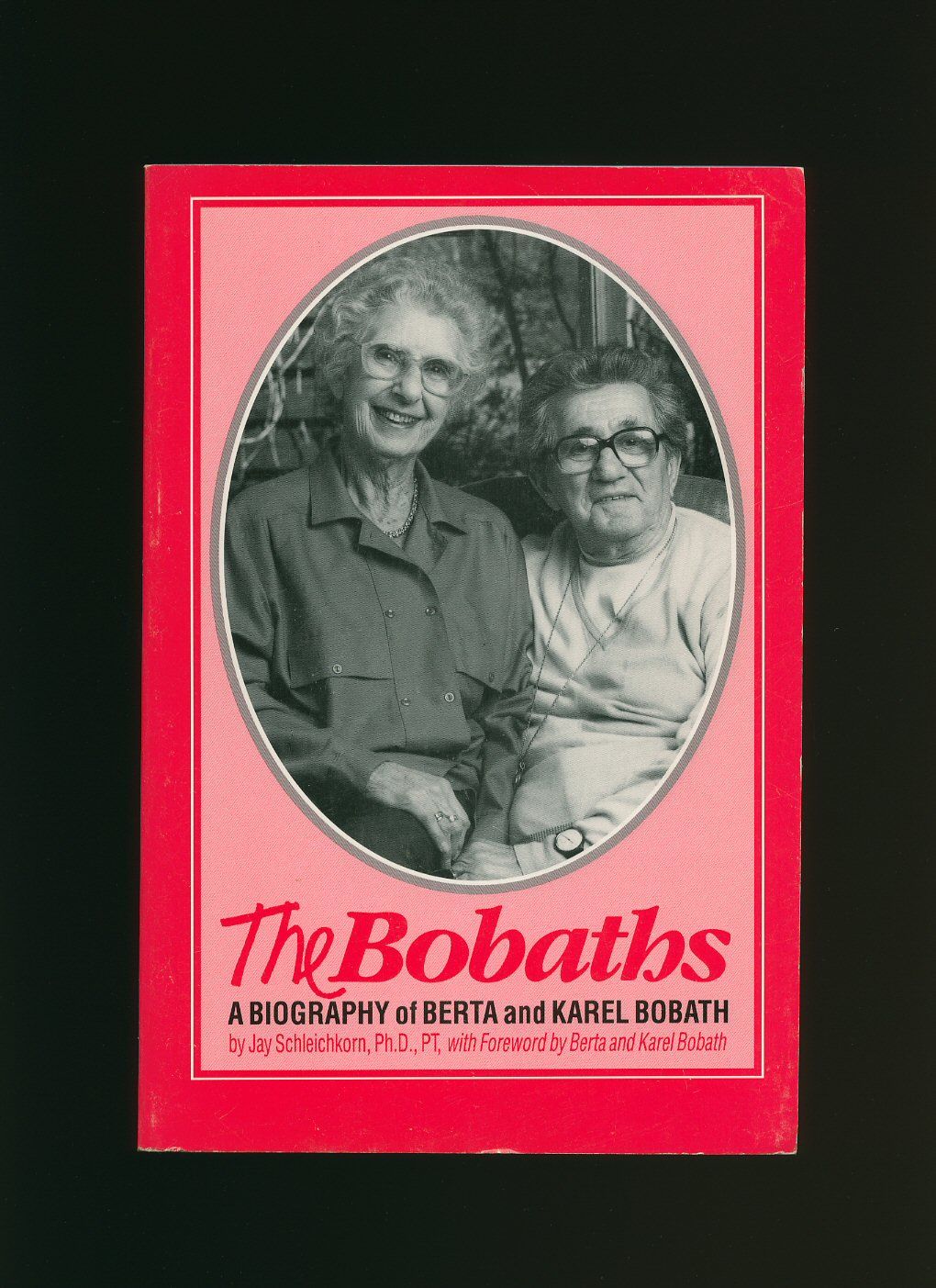
Neuro-Developmental Treatment. That's a lot of syllables. Very scientific sounding. It was developed by Berta Bobath, and for a long time was called The Bobath concept. Let’s just call it NDT/Bobath.

NDT/Bobath has been used on stroke survivors for decades and decades. When I was in school professors talked about it as if it was the most awesomest thing that had ever been awesome. It was the pinnacle. But it was complicated. It was so complicated you couldn't even learn it in school. You have to learn it from NDT/Bobath gurus. You could've gone to the Harvard school of physical therapy (if there was one -- which there isn't) and you still couldn't learn NDT/Bobath. Which is a red flag right there. If it works so well it would be required.

Instead, after graduating you have to go and get "certified" by NDT/Bobath gurus. Those gurus would've learned from other gurus, and up the pyramid it goes. NDT/Bobath training is expensive. We're talking about thousands of dollars and weeks of a therapist's life.

What could they possibly be teaching for that amount of time and money

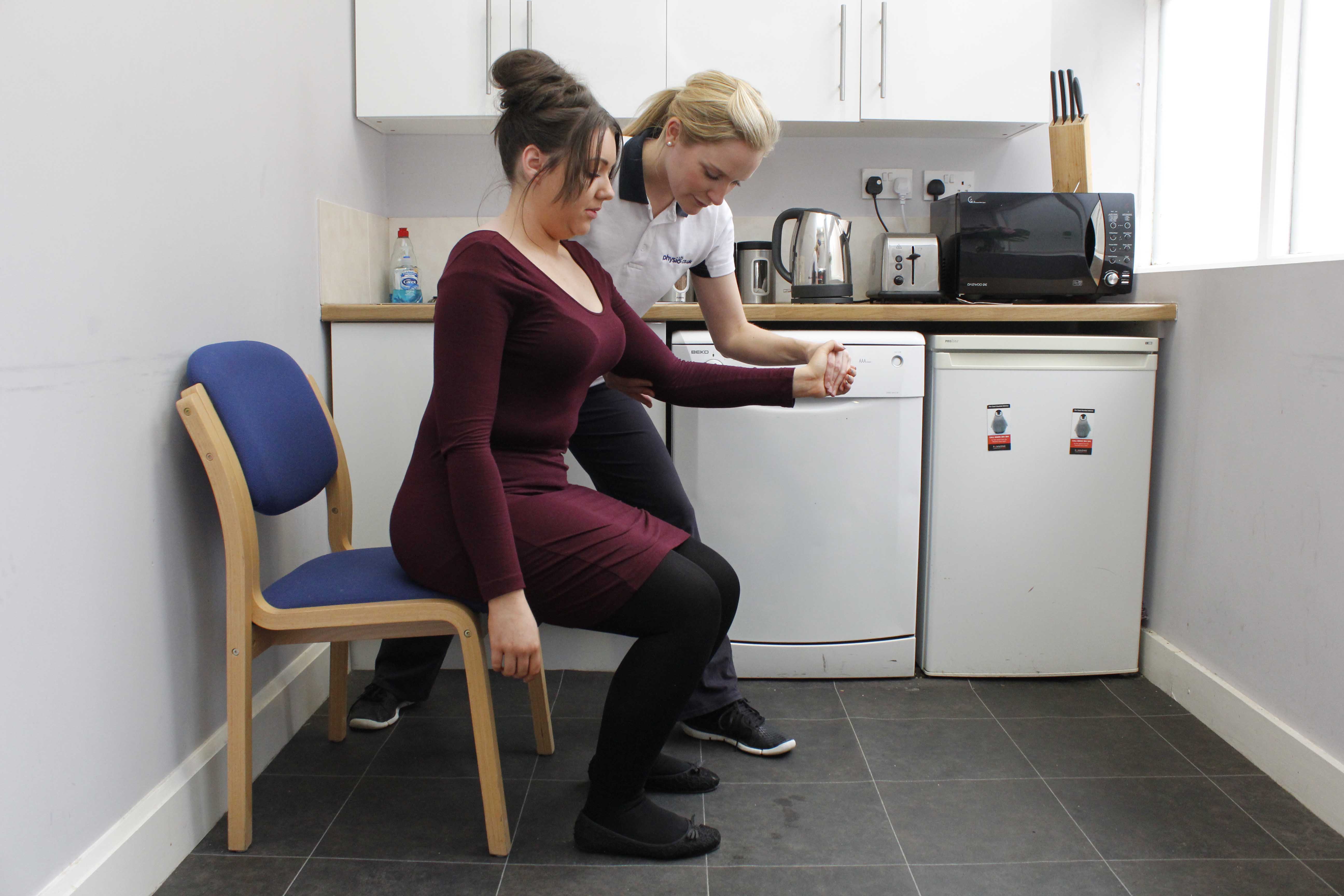
NDT/Bobath uses "patient handling" where if you touch the patient in a particular way the patient would get better. Which makes no sense. If you could touch somebody and make them better that would be really nice. Touching is great. "Hands-on" is the way many rehab clinicians describe themselves. But does this hands-on treatment work for stroke? Is NDT/Bobath effective?

No and not really.

And how do I know this? Systematic reviews.  Systematic reviews can be used to figure out if anything is effective for anything -- at least in medicine. If you want to be sure that something is effective you turn to systematic reviews. It's basically a study of all the qualified studies of whatever the subject is. This study of studies either says the thing works, the thing doesn't work, or they don't know yet.

NDT/Bobath always does poorly in systematic reviews. And that should be the end of it, right? It doesn't work. Goodbye. But not so fast. I've been doing talks for years to therapists. I've heard every justification for continuing NDT/Bobath.

Here are some arguments made by NDT/Bobath therapists:

1. "There's research that says it works, and research that says it doesn't work. Its 'he said she said.' I choose to believe the research that says it works."

There are individual studies that say that NDT/Bobath works. Individual studies prove little. The real question is, what do all the studies say? Large groups of studies, from researchers around the world, can be looked at and analyzed en masse. These "studies of studies" are called meta- analyses and systematic reviews. For NDT/Bobath there are quite a few; links below. They all come to the same conclusion: NDT is not particularly effective.

2. "NDT incorporates all the latest research into NDT. Therefore NDT is research-based."

I call this the "Horshella." 

Person 1: "I love horseradish."  
Person 2: "Well I love Nutella!" 
Person 1: "Oh, horseradish tastes great with Nutella." 

Maybe. But we should probably test it before we market "Horshella". Smearing NDT/Bobath all over well run clinical trials does not make NDT/Bobath research-based. In fact, it destroys the original research by adding a debilitating confounding variable. Adding NDT/Bobath to a well researched intervention may make that intervention better, worse, or not affect it at all. But the original research was never done with NDT/Bobath, so we'll never know. Stealing other people's research and glomming it does not make your intervention research-based. All you've done is hijacked well run clinical trials, and in the process made everyone look bad.

3. "I don't need research to tell me something works. I've seen it work."

The world is flat. And I can prove it. Look out the window. See? I know global warming is not happening. When I got out of the shower this morning I was freezing! The sun revolves around the earth. Every day the sun comes up over there and goes down over there, so its revolving around us. 

"I've seen it work" speaks to clinical observation, a very important part of being a good clinician. But what if we were talking about cancer? If the oncologist said "I've have this treatment that I've seen work," your question might be, "What does the research say works?" Clinical practice without research is bad for cancer patients and stroke survivors. Clinicians are not blinded, they don't gather and analyze data, they don't have a control group, there is no elimination of confounds and on and on. Simply: Clinical observation won't tell you if A works better than B.


4. "Research doesn't know what works so I can use anything I want."

Here is the American Heart Association Scientific Statement on the Rehabilitation Care of the Stroke Patient. It mentions constraint induced therapy, electrical stimulation, robotics, etc. It not only doesn't recommend NDT, it doesn't mention NDT.

5. "What do I use for very low level survivors? They can't move and/or can't follow directions. So, I move them. At least I'm doing something."

Nothing else stops the plague so we're sticking with leeches. (The difference is that leeches may actually do harm. NDT does not do harm except in the sense that it leeches (!) $$ that could be better spent elsewhere.) 

Remember: There are only two kinds of true paralysis after stroke: Spastic and flaccid. Most survivors can move. Many, however are told not to move on their own because its bad movement, and will cause more bad movement. And who suggested bad movement will cause more bad movement (which is not true)? Bobath! Bobath called the movement after stroke "pathological" and insisted it be suppressed.  To quote Bobath's book, Adult Hemiplegia: The aim of treatment should be to inhibit the patient's abnormal patterns of movement because we cannot superimpose normal on abnormal movements. Let's say that a therapist was able to do this during treatment. Does the survivor not move the rest of the time for fear of abnormal movement?

Later... The movements the patient performs with or without the therapist help should not be done with undue effort. 

Saturday, May 17, 2014

EXTRY! PT HELPS SURVIVORS RECOVER!

So here is a bit of good news: PT helps survivors recover. Which you woulda thought had already been proven, but here's some funny: Very little has been proven with rehab vis-à-vis stroke. And then there is the little problem of a pretty long tradition of clinicians in rehab deeply believing in therapies that, once examined in the light of well run research, looked very meh. And speaking of such...

This article reviewing the effectiveness of PT on stroke recovery is a gem (and not just because it references more than 10 articles on which I'm a co-author!). It doesn't just comment broadly on PT post-stroke, it nuances it. Some things work, some things don't. Guess what goes in the "doesn't work bin?" Guess. Here's a hint, this blog has said this for a long time... Like here. And here. Thats right...

NDT!

As the authors put it:
NDT has an unfavorable effect on length of stay, motor function (synergy), muscle strength of the arm, walking speed, spatiotemporal gait pattern functions like stride length, muscle tone, range of motion, balance, walking ability, arm-hand activities, and basic ADL. Insufficient evidence was found for NDT benefiting muscle strength of the leg, grip strength, muscle tone, brain activity, walking ability. 

But. The overall message of this article bodes well for PT and for survivors. Namely: There is strong evidence for PT interventions... in all phases poststroke.

Saturday, February 7, 2015

Bobath NDT: The bashing continues!

I know, I know, I bash NDT and Bobath a lot. I bash bloodletting too because it doesn't, whatchamacallit...work. That's it, work. It has the problem of not working. It is ineffective. It is devoid of efficacy. It is incapable of helping.

For a long time me and some colleagues in research got a ton o' backlash when we pointed out that the bird was dead. But more recently, PTs and OTs have generally got the message that its so dead, its starting to stank.

You know things are bad when Wikipedia turns on you! When you read this, have a look at two things: 1: The opening paragraph. 

Its almost like the million Wile E. Cayote cartoons where he runs off the cliff and tries midair to run back to the cliff. 2: the rest of the page. Scath. Ing. 

Friday, May 24, 2013

Bobath: The more you move, the worse you'll get

I've made my position on Bobath/NDT pretty clear (hint, I'm not a devotee). One of the many things Bobath was clearly wrong about was the effect of effort on spasticity. Bobath weirdly believed that using spastic muscles would increase spasticity. The way she put it in her book Adult Hemiplegia was, "Effort leads to an increase in spasticity." This is the way the thinking goes: Since movement poststroke requires effort, movement increases spasticity. Distilled, the philosophy was pretty clear: The more you move, the worse you'll get. Later in her book she doubled down on this concept. "The use of effort... will only reinforce the existing released tonic reflexes and, with it, increase spasticity."
 Wrong. Wrong. Wrong.  
(Here are the references...)
Note: CIT requires a lot of effort.
And it's more than just wrong, it obfuscates the issue for clinicians trying to find answers. I'm guessing, but at least 80% of all seminars for stroke recovery revolve around the Bobath/NDT. So clinicians learn it. And it wastes researcher's time, effort and funding. Because clinicians learn and believe it, researchers often have to go and "prove the negative." Researchers have successfully debunked the concept that effort increases spasticity. Because effort reestablishes cortical control over spastic muscles, spasticity is actually reduced. 

"This evidence is not compatible with the underlying assumptions of the Bobath approach." 
(From the 3rd article referenced, above) 

  ©Stronger After Stroke Blog 

Saturday, November 14, 2015

How Instant Gratification Can Hurt Recovery

(Note: The following is a fleshing out of a previous blog entry)
Instant gratification can hurt stroke recovery. Here’s how…

Let’s say you want to retain soft tissue length in finger and wrist flexors. What do you do? How about a static splint?
It makes sense; you hold the soft tissue in a lengthened position and the soft tissue won’t shorten, right? There’s only one problem: The evidence suggests static hand/ wrist splinting does not improve movement, function, reduction of spasticity, nor does it retain soft tissue length. So what does splinting do? It provides instant gratification. The therapist can claim they’ve done something and the stroke survivor believes something is being done.

Here are some other options that play the same trick… 
  • Stretching to reduce spasticity
  • Handling techniques
  • Tapping a tendon to get a muscle to fire
All of the above are good and bad
  • The good: Instant gratification
  • The bad: no evidence of long term efficacy.
Then again, what’s the harm? If a therapist wants to progress the leg during gait by tapping the quads, why is that bad? It’s not bad, but it may be… unhelpful, confusing to the survivor and a waste of therapy resources. Using the same the same example, tapping the quads to progress the leg here’s how it may be unhelpful:

A survivor with footdrop is in the parallel bars (II bars to the rehab nerds). The therapist taps the quads, progressing the tibia at the knee. The tapping puts a quick stretch which the golgi tendon organ perceives as potentially damaging to the quad which, through spinal reflexes, contracts to protect itself, progressing the tibia. The survivor is able to take a step.

OK, we have the instant gratification done. Now, what about the next step? Another tap? What happens when the survivor wants to take a step on their own? They felt their own muscles contracting when the therapist tapped them, but can the survivor do the same thing to himself? That’s confusing. And what is the carryover of the tendon tapping? Is there any physiological advantage the next day, the next hour, the next step? 

Most of the rehab and neuroscience research suggests having the survivor struggle to get their leg to through swing, by hook or by crook, utilizing whatever they have. This sort of “productive struggle” is what drives neuroplasticity post-stroke. If there’s one thing we know about brain plasticity its this: it won’t happen if it’s easy. Tapping makes it easy, but there is no long term benefit. Further, it is confusing to the patient. "Wow, I did that!"- they may think. If you elicit one of your spinal reflexes, yes, it is your muscles doing the movement. But it is not voluntary movement. The only way to get that movement again is to elicit the reflex again.

The same is true with stretching to reduce contractures and/or spasticity. Does stretch have a short term effect? Sure. Might that effect have some clinical usefulness? Sure. Will the impact of a single stretching session or even long term program of stretching reduce spasticity? Again, there is neither supporting research nor long term efficacy.

And handling techniques like NDT? Instant gratification, yes because you can get a survivor who can’t move to move and move without “pathological movement patterns” because, basically, the clinician is moving the survivor. But there is a bit of skepticism among researchers. Here is the Wikipedia take on itHere's my take on NDT. 

My suggestion is for clinicians to ask, “What will be the effect after the next associated reaction (laughing, sneezing, getting up from a chair), later the same day, later in the week, 6 months later, and so on?”

And survivors should be asking the same question.

Sunday, March 15, 2009

THE HISTORY OF STROKE RECOVERY


INTRODUCTION

This is the history of stroke recovery. This is a perspective that is uniquely my own; a simplified version of a narrative built up in my head over the years. It will be in multiple parts. How many parts? Well, answering that question would involve fancy-underpancy planning, to which I have an aversion.

Histories are important because they tie people, which is what people like to think about (generally), to events. In this case “events” refers to the ambling from there to here; from not knowing what a stroke was to understanding quite a bit about not only stroke, but recovery, too. Like most of our collective story, it all starts with cavemen… I wrote an article about it. And there is a chapter in my book, about how cavemen might have handled stroke. (One editor suggested I change every “caveman” to “caveperson” which I didn’t do because really?)


PART I: 
STROKE RECOVERY, THE EARLY YEARS

Anyway…so it starts with our ancestors that lived in caves. More accurately, it wasn’t about where they lived, but how much they moved. They moved in hunter-gatherer tribes. These were small bands of individuals, begat (!) from our common Mom (or “CoMom”), Lucy. These folks walked and walked and walked, always on two legs. Two leg walking was good because allowed us to see more stuff (because we were taller), and use our hands to carry junk (because they weren’t doing anything else and we feared they’d dwindle into tiny T-Rex-style flippers with claws) and keep us cool in the Kalahari heat (because standing provides less surface area). As you can see, I’m no anthropomorficologist, but this is my story, so I’ll filter the facts the way I see fit thank you.

So we walked and roamed and found stuff and ate it. We were also really good at hunting because, although we're not the best sprinters, we were great at distances running and walking. So we would run after edible beasts at our own two-legged pace. Once we caught up to them, it was a 2 fer 1; They were too tired to run and/or fight, and they were so hot they were already half-cooked!

If an individual had a stroke, there would have been a general feeling that some sort of higher power was pissed. It was probably an omniscient female deity, because all of our deities were female back then. And no wonder. There is now a belief that our numbers shrunk to just a few thousand at one point, probably because of a severe drought. So anything that could give birth would be seen as (as Kung-Foo Panda would say) awesome and attractive. So once the ever-pregnant She-God decided you needed a smack-down, a smack-down smacked upon thee. And if She chose, she would give you a "smack upside the head", which is what cavefolk used to call a stroke. And as I mentioned in my article, there would have been a serious effort to get the stroke survivor on their feet and the “therapy” would have been focused and ferocious. And it would be directed not by a therapist, but by survival instinct. This instinct knows no rational bounds, and no stinkin’ stroke was going to stop us from surviving. The survival instinct is just not something we access much any more.

We’re now in the “fat and happy” part of evolution (anthropomorficologically speaking).

This is how I've put it earlier:

Early humans and hunter-gatherer tribes of today may have had one advantage over present-day humans: A capacity for hard work. These were rugged people who survived using extreme strength and physicality. They knew what hard physical work was and they knew no other lifestyle than that of survival.

Intensity and frequency of post-stroke rehabilitation is one of the hot topics among stroke researchers. Research has shown that patients spend as little as 13 percent of their day (8 a.m. to 5 p.m.) involved in rehabilitation efforts within the first 14 days after the stroke while spending 78 percent of their time in bed or sitting next to their bed. Might the ability of our evolutionary cousins to couple their huge capacity for physical work with the natural demands of life in a hunter-gatherer tribe have some lessons for today's stroke survivor?

Modern-day researchers believe there are lessons. This belief is reflected in so many of the newer recovery options that involve so many more hours of work. "Intensive therapy" and "over-challenge" is the way researchers put it. We’re trying to get stroke survivors, by hook or by trick, to access their inner survival instinct.

PART II: THE GREEKS ADD THEIR 2¢

And that’s the way it stood for 3 mill plus years. You’d get a stroke and you’d fight like hell to get back to where you once belonged.

Hippocrates showed up 2400 YEARS AGO and did something remarkable: he defined stroke. He wrote about stroke and aphasia and TIA’s (transient or “mini” strokes). He made up a word for it: Plesso. Which meant “Slapped upside the head by God.” 250 years later another Greek doc, Galen, said that he thought stroke was “thick and dense humors” built up in the ventricles of the brain. Which, you know, is a pretty good guess that sounds a bit like an ischemic (block) stroke. Galen was pretty interesting. He was the personal physician to Marcus Aurelius and Commodus, two of the characters in one of my fav flicks, Gladiator.

Then nada for a thousand years or so and then the Germans came up with the word “strAcian” whch loosely meant “bonked on the head with a kilo of Spätzle.” The derivative of this word is stroke. But Hippocrates’sess’s word, Plesso was the basis for the word apoplexy, which you still hear on old Andy Griffin episodes.

PART II: THE CLASS OF 1950

Working in the early 1900’s, Sir Charles Sherrington was a colossus of all things neurological. Sherrington was a Nobel winner (1932, functions of neurons). It is hard to explain how ginormous this guy was. His ideas on what drove human movement were law. One of his hypotheses was called reflexology. Reflexology basically said that all control over muscles came from the spinal cord, and was just a series of reflexes. The brain got involved, sure, but just a filter for the prime mover: reflexes.

“Sherringtonian reflexology” was adopted by many of the most influential physical therapists that ever lived. Sherrington had a great influence on PT and OT as it related to stroke. His influence was especially strong from the 1950's to the 1990's. From the '50s to the '70s was when physical and occupational therapy was just beginning to address stroke-specific therapies. The problem is they had inaccurate tests, so it was difficult to determine if what they were doing was actually working.

They had another problem, as well. Some therapists took Sherrington’s reflexology and smeared it on every aspect of stroke recovery like a kid with hot toast and runny peanut butter. For his part, Sherrington disavowed the idea that it was all about reflexes (and accepted that movement was controlled and learned in the brain) by the late '40s. Hey, he was a bright guy and a true scientist; if new evidence comes to light, you change. If you want definitive answers, look to religion.

The problem was that a few influential therapists, most forcefully Berta Bobath, never got the memo that it is in the brain, not the spinal cord, that control resides. In her book Adult Hemiplegia (1970), Bobath began writing about, teaching and generally espousing that it was all about reflexes—which come from the spinal cord. Bobath also believed the way survivors naturally move after stroke was so bad that therapists should not allow the movement to take place. The way that survivors move is called synergistic movement. It is still believed, by many therapists influenced by Bobath to be movement so evil that Bobath and her followers set about separating stroke survivors from the only movement they had! Fast forward to 2000 and the Bobath Center (sorry, Centre), the British seat of all things Bobath. They issued the following statement: “While certain activities are not encouraged in some cases, the idea of stopping a client from moving, especially if they are motivated to do so, cannot be supported on financial, moral or scientific grounds.” But it has been difficult to let go of a core concept that had been a cornerstone of the Bobath approach for decades. For example, in 2008 an article (p.133) defending the Bobath approach wrote, "Abnormal/atypical patterns of coordination need to be suppressed and unwanted movements controlled..." Under this premise, you'd need someone with you during the entire arc of recovery. Otherwise you might move wrong.

Stroke survivors need the ugly movement to get to good movement. Imagine yelling to a baby, “Look at you, you duck-footed fool! Bend your knees and stop falling!!” Imagine telling someone who is learning a language (or instrument, or anything), “Stop making mistakes!” Learning requires mistakes. Mistakes corrected are learning.

Bobath’s therapy, called neurodevelopmental technique (NDT) is still very popular, but it’s not very scientifically-based. (See Here. Here. Here. Here. And a great non-scientific discussion here). My suggestion is to avoid therapists who say I’m a “this-based therapist, or a that-based therapists.” Instead, look for therapists who say something along the lines of, “I’m an evidence-based therapist. I consider the best science and meld it with my clinical experience.”

Weirdly, a contemporary of Bobath, Signe Brunnström, who also published her best known work in 1970, was clear right out the box: Use any movement, synergistic or not. We now know we need to encourage “ugly” movement to rewire the brain neuroplastically. Not only that, but Brunnström suggested really forward thinking concepts that are accepted by stroke-recovery researchers all over the world. Among them were Brunnström’s “6 stages of recovery.” Despite the fact that Hippocrates had defined stroke 2400 years before, Brunnström was the first person to fully delineate the predictable steps towards recovery. It turns out that her stages of recovery are so accurate that they can be correlated with brain-scanning technology like MRI (see Here and here). Just like Einstein, Brunnström predicted stuff and then waited for the world to catch up. The bad news was that Bobath’s NDT was wildly more popular than Brunnström’s techniques. Why was Bobath more popular than Brunnström? It may have been a simple issue of duration of message. Brunnström was diagnosed with Alzheimers and began to live in a nursing home in 1976. Bobath died in 1991.

PART III: TAUB BUCKS THE POWERS THAT BE

Edward Taub represents the full-on separation from the “reflexes rule” argument. He showed, through animal testing that, even when you get rid of reflexes (with an operation that cuts nerves to the spinal cord) you can still learn new movement. Repetitive practice movement drives changes in the brain. Those changes lead to better movement. This ushered in constraint-induced therapy, and other ideas that were as simple as pie: repeat a movement and that movement will get better.

Just like the cavefolk did.

Well duh. And it only took us forever to figure out what we already knew.


My daughter wants to to play soccer now. The End.

Wednesday, March 5, 2014


REPETITIVE — CHALLENGING  MEANINGFUL
Electrical Stimulation (E-Stim)
Rhythmic Bilateral ARM Training 
Rhythmic Bilateral LEG Training 
    Mirror Therapy
    Increasing walking speed 
    Constraint Induced Therapy (CIT)
      CIT early after stroke may not be a good idea
        Amazing CIT dissertation by STACY L. FRITZ that includes:
        Sensation Recovery
        Why task specific practice important in neurorehab
        REDUCTION OF SPASTICITY
        Electrical Stimulation (E-Stim)

        Spasticity and sleep

        Mirror therapy reduces spasticity

        Stretch (any form, duration, or arc of time) does not decrease Spasticity
        Selective dorsal rhizotomy (SDR) success in adults
        Botox strength increased, and uptake time decreased with EStim
        PRIMING THE BRAIN FOR RECOVERY
        VIDEO
        RESEARCHING
        Researching Stroke Recovery
          Clinical Guidelines from around the World
          Information About Other Forms of Brain Injury
          Find Stroke-Recovery Research in Your Area
          Two Free Stroke-Specific Magazines
          MEASURING
          Measuring Recovery
          Cognitive (mental) Tests
          Posterior Pusher Syndrome (or) posterior pelvic tilting
          REFERENCING
          Walking within within 24 hours after stroke: help or hurt?
          ·  An article where they interviewed therapists, docs and nurses: Conclusion: Our study shows that most clinicians had concerns in relation to early mobilization of stroke patients and more clinicians had concerns for hemorrhagic than for ischemic stroke.
          · An article looking at very early mobilization and depression: Conclusion: Very early mobilization may reduce depressive symptoms in stroke patients at 7 days post-stroke.
          · Early mobilization out of bed after stroke may be all good: Conclusion: It seems to reduce severe complications but not cerebral blood flow:
          · Early mobilization out of bed after stroke, maybeConclusions: Insufficient data are available to prove the beneficial effects of early mobilization after stroke.
          · A Very Early Rehabilitation Trial for Stroke (AVERT): Conclusions: Fewer patients in the very early mobilisation group had a favourable outcome than those in the usual care group. 
          · The LEAPS trial (the largest study ever done on post-stroke rehab): "patients who received early locomotor training experienced more multiple falls."

          The curious case of NDT.


          Blog Archive