- Proprioception: the ability to imagine where your body is in space without looking at it.
- Eyesight: the ability to find "true north" and/or where the horizon is.
- Vestibular sense: the ability to sense movement, and know where your head and body are in space. When the vestibular system is not working it's the classic inner ear problem: Meniere's disease, dizziness, vertigo.
Wednesday, December 23, 2020
"𝗜 𝗳𝗮𝗹𝗹 𝗼𝗳𝘁𝗲𝗻. 𝗪𝗵𝗮𝘁 𝗱𝗼 𝗜 𝗱𝗼?"
Sunday, December 13, 2020
You've had a 𝙢𝙖𝙨𝙨𝙞𝙫𝙚 stroke? Hold her beer!
This image looks like right
side of Michelle's brain is gone. But this this image is taken in radiological convention. What
is radiological convention? Imagine you've entered a patient's room.
You are at the foot of the bed looking at them. That's radiological
convention: As if you're standing at the foot of their bed.
Tuesday, November 10, 2020
Pete On a Podcast
I was interviewed on the Strokecast podcast by Super Survivor Bill Monroe.
We talked about stroke recovery while touching on everything from Malcolm Gladwell, to the po
Friday, October 30, 2020
Get better movement without moving a muscle
Let me come straight to the point: There are three ways to drive changes in your brain to help you move better. All three effect very similar parts of the brain. And here is something that warms my lazy heart: Two of them you don't have to move a muscle!
The image above is from researchers Robert M Hardwick, Svenja Caspers, Simon B Eickhoff, and Stephan P Swinnen. (Reference)
What moves your body? It always starts with the brain!
We all know that muscles move us.
But the brain moves muscles. This idea is lost on a lot of clinicians
in rehab. They'll talk about muscle strength, range of motion, quality of
movement, etc. etc. etc., but not talk about the brain. Why don't they talk
about it? They can't see it. They can't measure it. And really, they can't help
it.
How do you get the brain to
change to move better?
There's a bunch of ways to get the
brain to rewire for better movement.
1: Move. This is called repetitive practice. "We are we repeatedly do. Excellence, then, is not an act but a habit.” (Will Durant, paraphrasing Aristotle). The more you do a movement repetitively, the more the part of the brain that controls that movement is activated.* Note: No one else can do if for you, it has to be you doing the work. Musicians know it, athletes know it, dancers know it, martial artists know it, and now you know! More info here.
2: Imagine a movement. This is called mental imagery, or mental practice. If you imagine doing a movement the way you did it prior to your brain injury, the part of the brain that controls that movement is activated.* More info here.
3: Watch someone else do the movement. This is called action observation. If you watch someone do a movement, the part of the brain that you use to do that movement is activated.* Find instructions here.
About this image:
Tuesday, September 29, 2020
tPA: 𝙎𝙩𝙞𝙡𝙡 Not Used Enough
I'm reading the book tPA for Stroke: The Story of a Controversial Drug* about the clot busting drug that's used in "block" (ischemic) strokes. It was published in 2011.
The book tells the long, winding, political, and controversial path tissue plasminogen activator (tPA) took to get to market, and then be—somewhat at least—accepted as a treatment for ischemic (block) strokes. Is TPA still controversial? For some reason, yes.
Interesting Facts About TPA
•A study by the American Heart
Association looked at data from 300,000+
ischemic stroke patients, TPA was administered to 3.3% of patients.
⇒2.2% of patients at regular
hospitals got tPA
⇒6.7% at hospitals with PrimaryStroke Center Certification.
⇒Survivors are three times more
likely to get tPA if at a certified stroke center.
•In 2019 the journal Stroke did a review
of malpractice suits relating to treatment of stroke in hospitals
⇒Almost 30% of the cases were failure
to treat with tPA.
⇒The average payout for pre-trail
settlements was $1.8m. The average payout for court verdicts was almost $10m.
•A 2020 article in the Journal
of the American Academy of Neurology found “Overall, about
one-quarter of eligible patients with AIS (‘block stroke’) presenting within 2
hours of stroke onset failed to receive tPA treatment.”
⇒The article points out that women
and minorities are undertreated with tPA because of course they are.
•Speaking of women: Another 2020 article in the Journal of the American Academy of Neurology found…
⇒Compared to men, women were 30% less
likely get tPA.
⇒Sidenote: Women are also less likely
to receive aggressive treatment when it comes to heart attack.
•Weird Science: tPA is never
safe for hemorrhagic strokes. Except sometimes.
⇒There
are multiple studies (1, 2, 3)
showing that tPA can be used to increase longevity, decrease incrainial
pressure (pressure on the brain inside the skull), and reduce injury to neurons
from hydrocephaly (brain swelling). Note: t-PA in "bleed" stroke
shows efficacy in ongoing clinical trials, not yet in clinical
practice. The data we're waiting on is from the CLEAR
III trial.
•Can tPA be given for a second stroke? Yes! About
25% of survivors will have a second stroke. So its important to know two
things:
⇒You
should know the FAST test. Better yet, know A better version of the test.
⇒tPA is safe and just
as effective for a second stroke. Or, if you want it more science-y: "Repeated
use of IV-tPA was not associated with an increased risk of intracerebral
hemorrhage or death in patients with recurrent acute ischemic stroke."
•Is tPA effective and safe if you're over 80? Yes!
*The author, Justin Allen Zivin, MD, Ph.D., passed away in 2018 at age 71. He dedicated his career to identifying treatments for stroke, specifically the use of tissue plasminogen activator, or tPA... He encouraged the National Institute of Neurological Disorders and Stroke to change the paradigm for clinical stroke research, organizing a study that required a complete rethinking of how stroke care is managed.
This book was co-authored by John Galbraith Simmons.
Thursday, August 27, 2020
F$#^R& The Plateau!
Friday, June 19, 2020
SPACE TO RECOVER—THE HOME GYM
![]() |
| My kids in our home gym |
![]() |
| Seven buck at Goodwill! |
A treadmillA recumbent cycleAn upper body ergometer (hand cycle)An exercise matsomething used to maintain balance (sturdy chair, etc.)WeightsResistance bandsElectrical stimulation devicesBalls, decks of cards, or other “toys”A mirror
Saturday, May 9, 2020
Stroke evaluations drop by nearly 40% during COVID-19 pandemic
![]() |
| What Covid really looks like |
![]() |
| Click to make larger |
Saturday, February 15, 2020
Spasticity: Can ANYTHING be done?
Below is an outline of various spasticity-reduction treatments.
The neuroplastic model of spasticity reduction. I developed this one years ago. You can find an outline of it from my book here. It is the only non-surgical, permanent option on this list. Here is the emerging evidence for the "neuroplastic model of spasticity reduction."
- Motor learning therapy increased spastic muscle's contralesional cortical motor regions leading to decreased spasticity
- Intensive training in patients with increased muscle tone improves function without exacerbating spasticity
- CIT reduces spasticity 2017
- CIT reduces spasticity 2013
- CIT reduces spasticity and increases functional use
- CIT increases strength and decreases spasticity
Weight-bearing. This is one that a lot of therapists love. Whether you're standing on the leg that's spastic, or putting weight through the upper extremity that spastic, there is a reduction in spasticity. That reduction will last until the next big volitional movement and the spasticity comes back. But it is a great short-term strategy that helps set the survivor up for treatments that are more permanent.
Stretch. Always the first line of defense. There's a lot of good reasons to stretch, but it does absolutely nothing to reduce spasticity in the long-term. This was established by not one but two Cochrane reviews. It didn't even reduce contracture formation.
Botox (and other neurolytics). Back in the day there were a couple of formulations of Botox. Eventually you would become immune to one so they'd use the other one. You'd become immune to the second formulation, and that was the last time it would be effective. Now they have so many formulations that you can be on Botox for the rest of your life. It's a Band-Aid. When it wears off, it's done. It's also an expensive, and often painful Band-Aid. Oh, and it gets in the way of my neuroplastic model.
Electrical stimulation (E-Stim). Typically this involves reciprocal inhibition of the spastic flexors. Put simply: You E-Stim the muscles opposite the powerful flexor muscles that cause the problem. Example: E-Stim the elbow extensors (triceps) to relax the elbow flexors (biceps, etc.). Various doses will provide a temporary reduction is spasticity.
Monday, January 6, 2020
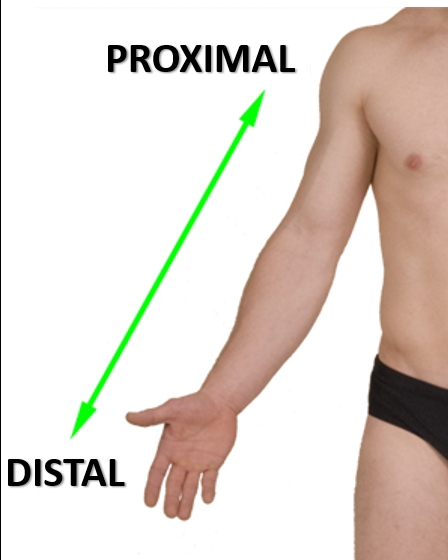
Sorry not Sorry: Stroke Recovery is NOT Proximal to Distal.
Assuming this may hurt recovery.
The 'proximal to distal' crowd would say recovery in the arm/hand would be in this order:
- first to come back are the muscles in the shoulder and shoulder blades,
- then progress to the elbow,
- then to the forearm,
- then to the wrist,
- then the hand,
- then the finger joints close to the hand,
- then the finger joints furthest from the hand.…
Here's what actually happens:
1. You have a stroke; one side of your body is affected
2. The proximal muscles (i.e. shoulder) have bilateral innervation; both sides of your brain control the proximal muscles.
3. Your shoulder comes back first not because of the "proximal to distal rule" but because your brain never ceded control over the shoulder muscles.
4. The clinician sees the shoulder coming back before everything else and figures, "That's the proximal to distal rule!"
You might argue, "If the shoulder comes back first, then maybe the reason is wrong, but its a distinction without a difference. Survivors will still see proximal to distal return."
But what if the fingers are coming back first? Clinicians may not think to test the hand because the shoulder is not back. Or they may focus on shoulder control even though the hand can drive shoulder control if hand movement is recognized and encouraged.
In the lower extremity, the problem can be even worse. Proximal muscles would move the hip, and those are what are focused on. Meanwhile, an AFO (ankle brace) is routinely put on the survivor even though the ankle (a distal moment) may be coming back on its own.
And AFOs are easy to walk into, but hard to get rid of.
Sunday, November 17, 2019
Clinicians: When it comes to stroke recovery: KISS

When it comes to stroke recovery, clinicians would do well to keep it simple.
One. The coolest new stroke recovery stuff comes from neuroscience. And the neuroscience perspective makes things really simple. People hear the word neuroscience and they assume everything's going to get really complicated really fast. And while there is nuance in the brain that wins people Nobel Prizes, the global perspective neuroscience provides simplifies recovery. There is good news for people like me who spend a lot of time trying to explain stroke recovery: Some of the greatest neuroscientists in the world are really good at making the brain simple.
Nobody likes complexity. But complexity can be even more vexing to somebody who has suffered a brain injury. Don't get me wrong, I've met plenty of survivors that are smarter than I am after their stroke. But most people have had a stroke are focused on recovery and keeping their life somewhat on track than complicated recovery options.
Saturday, October 5, 2019
What is stroke recovery?
Click image to make bigger
So, lets review:
Thursday, September 19, 2019
Mental Practice Recordings now available!
And we were known for early mental practice. Here's an early one, here's a later one. The MP stuff may have had the biggest impact. Therapists like it because they don't have have to burn through a lot of clinical time because the survivor did it themselves. And it didn't stress the survivor for two reasons:
1. There was a deep breathing part to begin and end the MP session, so it may actually reduce stress.
2. There was no actual movement, only imagining the movement, so there was no muscular stress.
And survivors liked it because they could do it on their own. they could do it after they had been discharged from therapy. And its didn't cost them anything.
Tuesday, August 27, 2019
The bad news is, you may be flaccid. The good news: You may not be.
If a survivor is flaccid on the "bad" side, there is no movement, no tone, no reflexes, no nothing. And if someone moves the survivor's limb it feels like moving an unattached door hinge: There's no resistance. But having a floppy arm is not the only problem.
![]() |
| Subluxed right shoulder |
Because muscles do more than just move things, there can be orthopedic problems. One of them is shoulder subluxation (dislocation). The muscles that hold the shoulder in its shallow joint are called the SITS muscles. When these muscles are flaccid the arm literally falls away from the joint. There are also pain syndromes associated with limb flaccidity. An example is called shoulder-hand syndrome.
Stroke survivors are often flaccid on the "bad" side immediately after their stroke. The good news is that, as the brain comes back online, flaccidity usually goes away. Usually.
But let's step back for a second. Clinicians often misdiagnose someone as flaccid. They might move the limb around a little bit and think, yeah, its flaccid. How might they prove its flaccid? They'd have to "add velocity." That is, they'd have to move the limb rapidly. But how much velocity? How rapidly? Well, to quote myself, Because spasticity is “velocity dependent” (the faster the limb is moved, the more spasticity is encountered), the test is done moving the limb at the “speed of gravity.” This is defined as the same speed a non-spastic limb would naturally drop. In other words, fast. This test is called the modified Ashworth. And its almost never done in someone who is "low tone" after their stroke.
So before the clinician claims you're flaccid, with the concomitant bad prognosis, make sure they do the Ashworth in any muscle they're claiming is flaccid.
If it remains flaccid the first week after stroke, the final outcome is usually poor.